By hiding your IP address, a VPN can stop people from following you. An outstanding tool for safeguarding your online privacy and preventing unauthorized access to your private data is a kill switch. Furthermore, VPNs provide extra security features like a kill switch. Consider using a VPN to stop someone from tracking you using a proxy or VPN. Some websites only allow users to access them from a specific country. However, using a proxy server is becoming a more and more common way to improve this online communication.
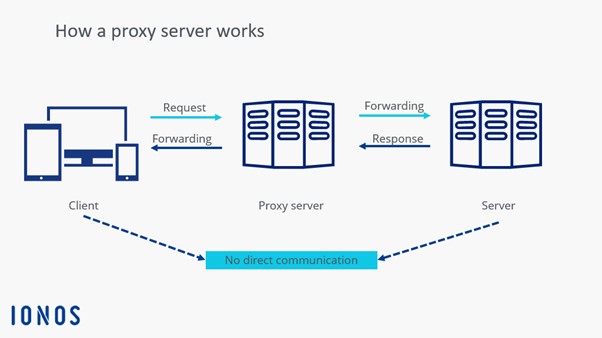
Your request first passes through the proxy rather than your computer interacting directly with a website. In essence, you are sending a direct request to a distant server when you enter a web address into your browser. Consider a proxy as a sophisticated, amiable middleman that separates your device from the internet. It serves , as you can read on mystrikingly, a gatekeeper, a digital buffer, and a personal assistant all in one. After that, the proxy submits the request on your behalf, gets the information, and sends it back to you.
The majority of users navigate the vast and complex architecture of the modern internet without ever thinking about the invisible mechanisms that make their journey easier. You can successfully conceal your IP address by using a proxy server to route your internet traffic, making it more difficult for third parties to identify you. Increased privacy is one of the strongest arguments for using a proxy server. Let's dive into the world of proxies and explore their myriad advantages. If you want to avoid targeted advertising or are worried about your digital footprint, this extra layer of anonymity can be especially helpful.
There are many different types of proxies available, depending on your needs. Any kind of server that serves as a middleman between you and the website or service you wish to access is referred to as a Depending on your requirements, proxies come in a wide variety of forms. Fundamentally, a proxy server serves as a middleman between your device and the internet. Your online experience may be significantly impacted by this seemingly straightforward diversion. Rather, the request is sent on your behalf after first passing through the proxy server.
A request for access to a website or online service is not sent straight to the destination server. To make configuration easy, even for novices, many providers offer dashboards, location selection, and guides. You get an IP address, port, login credentials, and authentication method after buying a plan. These configurations are input into your software, script, or browser. After that, the selected server receives traffic from that application.
Most of the time, setup is simple. For the main operating systems, such as Windows 10, Linux, Android, and Apple's OS X, there are numerous articles that describe how to set it up.