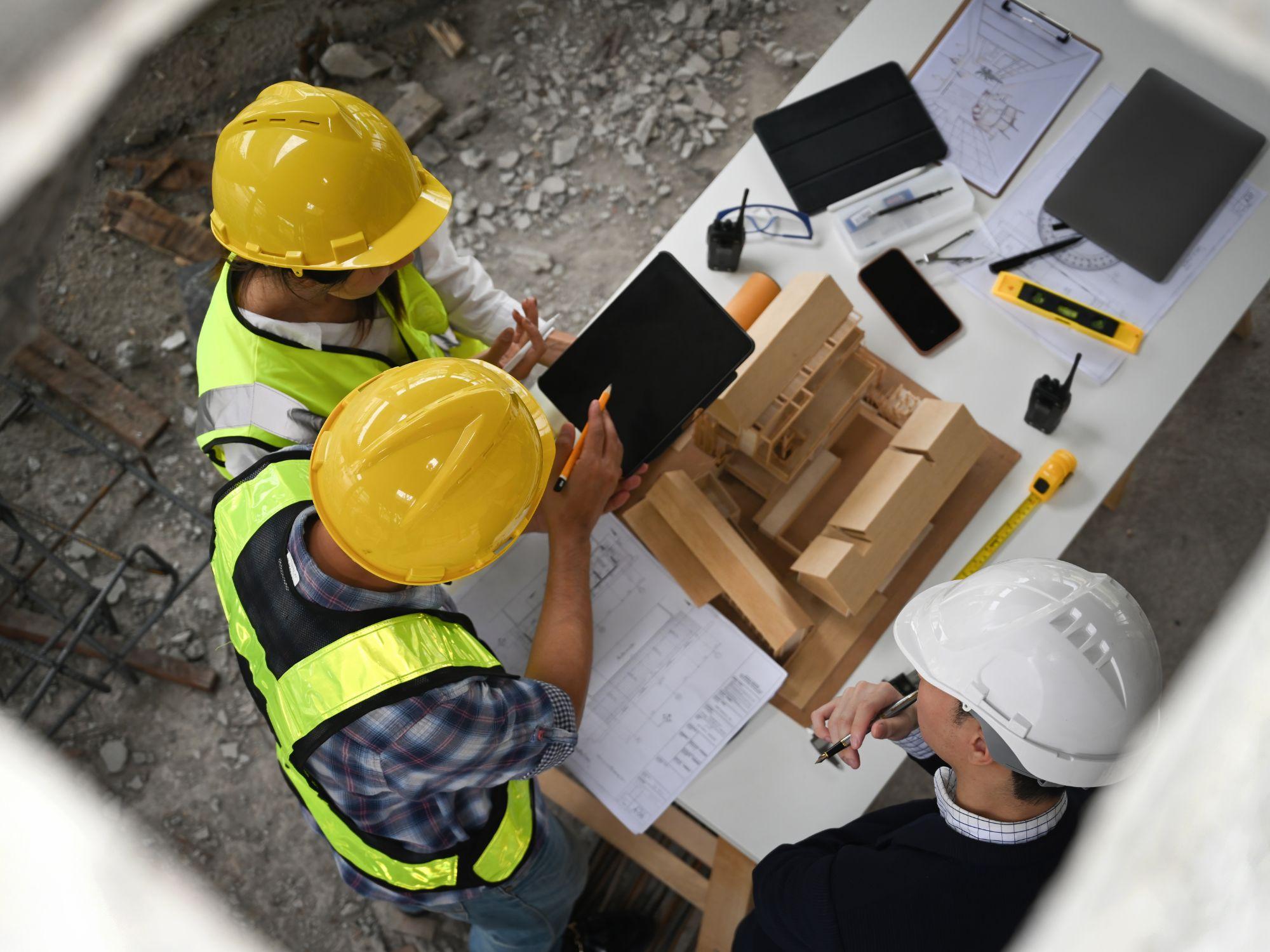
Construction sites in the U.S. are primarily categorized into residential, commercial, industrial, and infrastructure (heavy civil), with some other specialized sectors like institutional, energy, renovation, and work. Each type varies in terms of purpose, scale, regulations, and workforce requirements, but collectively they are the foundation of the U.S. economy and community development.
In today’s highly competitive construction market, contractors and developers can’t afford guesswork when it comes to project costs. Reliable construction estimating services for contractors help them clearly understand how much a project will actually cost before any work begins. This includes evaluating materials, labor, and overall project scope so there are no surprises later.
Instead of reacting to budget issues during construction, professionals use this early cost insight to plan smarter, control financial risks, and submit more competitive bids. Whether it’s a small residential build or a large infrastructure project like a highway, everything depends on having a clear financial roadmap from the start, well before the first shovel hits the ground.
What Are Construction Site Categories in the U.S.?
The construction sector in the U.S. is incredibly large and varied, influenced by regional needs, economic situations, and governmental policies. For instance, apart from a suburban housing development in Texas, major infrastructure upgrades in California are the norm. Each type of project fulfills a particular need. Although the categories initially appear straightforward, there are big differences in terms of implementation, pricing, and regulation.
Besides being a simple technical categorization, these construction site types really show how a community expands, how companies grow, and how the country keeps its essential infrastructure functioning.
Residential Construction Sites
Most Americans are, on a daily basis, surrounded by residential construction sites. In fact, these are the types of projects that include single-family homes, apartments, condominiums, and townhouses. Due to rapid population growth and increasing housing demands, especially in fast-growing states like Florida and Arizona, residential construction is one of the main sectors that are not just buildings; they are a symbol of stability, investment, and community.
Construction companies must comply with local building codes, zoning regulations, and safety standards to guarantee the quality and longevity of their work. Compared to large-scale projects, the elements, the manpower, and the schedules are generally more controllable. However, the profit margins may still be narrow.
Within this sector, residential estimators calculate material costs, labor needs, and timelines accurately. Thanks to their efforts, builders stay away from major overruns and produce constructions that satisfy the clients as well as the financial objectives of the business.
Commercial Construction Sites
Commercial construction sites aim at structures that serve various corporate purposes, e.g., office buildings, shops, shopping malls, hotels, and restaurants. Such projects are mostly implemented in cities or frequented areas where the design, accessibility, and customer experience matter the most.
In contrast to residential projects, commercial ones generally require larger workforces, stricter timeframes, and more funds. Besides, it is very important to ensure that the constructions are accessible to everybody, including the disabled (compliance with ADA). In addition, developers are generally very interested in energy-saving and state-of-the-art building characteristics that will help attract tenants and customers.
Commercial construction is an indicator of economic development. When businesses grow, new constructions follow that generate more jobs and bring about local economic upliftment.
Industrial Construction Sites
Industrial construction sites rank among the most complicated and challenging in the sector. These encompass factories, manufacturing plants, warehouses, refineries, and distribution centers. Along with the growth of e-commerce and domestic manufacturing, industrial construction has witnessed substantial expansion across the U.S.
Such sites call for the deployment of the most suitable tools, employment of a professionally trained workforce, and compliance with the highest safety standards. Moreover, employees face various challenges such as working with heavy machines, hazardous substances, and complex systems. Therefore, there is a great need for proper planning and precise implementation.
Industrial works are indispensable to supply networks and production processes. Their absence would bring the movement of goods around the country to a standstill, causing inconvenience to businesses as well as consumers.
Infrastructure / Heavy Civil Construction Sites
Infrastructure building, or heavy civil construction, refers to the development of major public facilities like highways, bridges, airports, railways, and dams. These projects are mostly financed by a combination of federal, state, and local government sources and are very crucial for the provision of public utility services.
Recently, significant infrastructure investment projects have been underway in order to upgrade the deteriorating systems nationwide. Usually, such projects extend over several years and involve the collaboration of many different agencies, contractors, and stakeholders.
Heavy civil construction very much affects people's daily lives. It is something we take for granted as we rely on infrastructure, playing a crucial part in our commutes, shipments, and public services.
Institutional Construction Sites
Institutional building sites primarily serve the community through public-serving facilities like schools, hospitals, higher education institutions, government offices, and military installations. These large-scale population-serving projects have to adhere to stringent safety, accessibility, and operational standards.
For example, hospitals that necessitate sophisticated HVAC systems, sanitation controls, and emergency facilities. Schools, on the other hand, are expected to be secure and conducive to learning for students and staff. Institutional building works, therefore, combine difficulty with satisfaction.
Since such projects usually come with public financing, it translates to transparency, responsibility, and adherence to set norms during the whole construction phase.
Energy and Power Construction Sites
With the U.S. gearing towards more sustainable and renewable energy sources, energy construction sites are gaining significance day by day. They cover power stations, solar energy installations, wind energy systems, and oil and gas facilities.
The clean energy movement has opened contractors and investors. Solar and wind energy projects are flourishing, especially in states like Texas and California. However, the rest of the energy industry is evolving to meet the new standards.
The construction of energy facilities is indeed not only concerned with energy production, but also with the whole lifestyle of the people surrounding the communities.
Renovation Construction Sites
Refurbishment and restoration works aim at enhancing or maintaining existing structures rather than creating new ones. They commonly occur in historically rich cities where heritage buildings and old infrastructure are in need of renovation.
House renovations, office refurbishments, and preserving historic places are examples of this. Renovation works may be quite challenging as they might require the use of existing buildings, dealing with old materials, and fulfilling current regulations.
Renovation is often seen by many as a feasible and environmentally friendly way to retain one's heritage while at the same time improving functionality.
Conclusion
Across America, construction sites vary tremendously, from a mere handful of workers on a residential house to thousands of laborers on infrastructural mega-projects. Even though each type has its own set of difficulties and requirements, all of them play a part in the growth and stability of communities in the United States.
Whether it is producing housing stock, facilitating commercial operations, or keeping public utilities functioning, construction is absolutely indispensable. Familiarity with different construction site types enables not only the industry professionals but also the general public to be more aware, resulting in efficient planning and helping resource-wise development.
FAQs
- What are the major types of construction sites actually in the U.S.?
Basically, they include housing, office and retail, manufacturing, and public works, while there are also some pretty distinct areas like healthcare and power plants.
- Which kind of building is developing most rapidly?
Building of energy facilities, mainly various kinds of clean energy ones such as solar and wind, is among the sectors that are rapidly expanding.
- For what reason is the construction of infrastructure so vital?
It provides for the development of means of transport, utilities, and public facilities that people use every day.
- In what way does industrial construction become more complicated?
Besides heavy equipment and specialized materials, it is governed by very secure procedures
- Are remodeling ventures part of construction?
Definitely, remodeling and restoration are significant within the construction world, particularly in cities with older architecture.