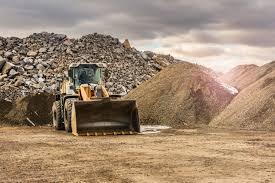
When a construction project runs short on materials, the cause is rarely a single dramatic event. More often it is a chain of small dependencies stretching back through transport, processing, and extraction, any link of which can break. Aggregate sand and gravel sit at the foundation of nearly every construction project, and the supply chain that delivers them is often taken for granted until it falters. As material costs rise and timelines tighten, the question of where aggregate sand and gravel come from, and how far they have to travel, has become a strategic concern rather than a logistical afterthought. The evidence increasingly points to a clear conclusion: for most projects, local sourcing offers advantages that distant or imported supply cannot match.
This is not merely a matter of convenience or regional preference. The economics, reliability, and practicality of aggregate supply all favor local sources for the vast majority of construction needs. Understanding why local sourcing of aggregate sand and gravel tends to outperform imports helps buyers build more resilient supply strategies and avoid the disruptions and costs that come with overextended supply lines.
The Weight Problem at the Heart of Aggregate Logistics
The defining characteristic of aggregate sand and gravel, from a supply chain perspective, is weight. These are dense, heavy materials used in large volumes, and weight is the single most important factor shaping how they are sourced and delivered. Transporting heavy material over long distances is expensive, and the cost of transport can quickly rival or exceed the cost of the material itself. This simple physical reality is the foundation of the case for local sourcing.
Because aggregate is so heavy relative to its value, the economics of moving it deteriorate rapidly with distance. A load of aggregate sand and gravel sourced nearby can be delivered at a manageable cost, while the same load hauled from a distant source carries a transport premium that inflates the delivered price substantially. Imports compound this problem, adding the cost and complexity of long-distance shipping, handling, and inland transport to reach the project site. For a material this heavy and this widely used, the logic of sourcing close to the point of use is difficult to overcome. This is why local and regional supply dominates aggregate markets in practice, even where imported material is technically available.
Reliability and the Cost of Disruption
Beyond direct cost, local sourcing offers a reliability advantage that has become increasingly valuable in recent years. Long supply chains, particularly those that cross borders or oceans, are exposed to a wide range of disruptions, including shipping delays, port congestion, trade-related complications, and the simple uncertainty that comes with material traveling great distances. Each additional link in the chain is another opportunity for something to go wrong, and when it does, the project relying on that material pays the price.
Local supply chains are shorter and therefore more resilient. Material sourced from a regional supplier travels a known route over a manageable distance, with fewer points of potential failure. This resilience matters because the cost of a supply disruption extends far beyond the material itself. A delay in receiving aggregate sand and gravel can idle crews, disrupt project sequencing, and push back milestones, and in a high-cost construction environment those consequences compound quickly. The reliability of local sourcing is, in effect, a form of risk management, reducing the exposure to disruptions that distant supply chains inevitably carry.
Domestic Strength in Aggregate Supply
A point worth emphasizing is that, for aggregate sand and gravel, local and domestic sourcing is not a fallback but the norm. Domestic production of these materials is robust, and the market is largely self-sufficient, with imports filling only specific regional gaps rather than serving as a primary source. This reflects the underlying economics: it rarely makes sense to import a heavy, abundant material when comparable material is available closer to the point of use.
This domestic strength is an asset for buyers. It means that, for most projects, high-quality aggregate sand and gravel can be sourced regionally without dependence on imports or exposure to the risks of international supply chains. Where imports do play a role, it is typically to address a particular regional shortfall rather than to compete broadly with domestic supply. For buyers, the practical implication is that local sourcing is usually both available and advantageous, and that building a supply strategy around regional sources aligns with how the aggregate market actually functions.
The Advantages of Local Sourcing at a Glance
The case for sourcing aggregate sand and gravel locally rests on several concrete advantages. The most significant include the following:
- Lower transport costs, because shorter haul distances reduce the freight expense that makes up a large share of the delivered price of heavy aggregate.
- Greater supply reliability, since shorter and simpler supply chains are less exposed to the delays and disruptions that affect long-distance and imported material.
- Faster delivery and responsiveness, as local suppliers can respond more quickly to orders and adjust to changing project needs.
- Reduced environmental impact, given that shorter transport distances mean lower fuel consumption and emissions per load.
- Local market knowledge, because regional suppliers understand the conditions, requirements, and project landscape of the areas they serve.
- Easier coordination, since proximity simplifies communication, scheduling, and the management of staging and delivery logistics.
Taken together, these advantages explain why local sourcing is not simply a preference but a sound strategy for the great majority of construction projects. The combination of cost, reliability, speed, and coordination is difficult for distant or imported supply to match when the material in question is as heavy and widely used as aggregate sand and gravel.
The Hidden Costs of Distance
When buyers compare aggregate sources, the quoted price per unit can be misleading, because the true cost of distant or imported material includes expenses that do not appear on a simple price comparison. Freight is the most obvious of these, but it is far from the only one. Longer supply chains carry inventory and timing costs, as buyers must order earlier and hold material longer to guard against delays. They carry coordination costs, as managing a distant supplier demands more communication and oversight. And they carry risk costs, the financial exposure created by the greater likelihood of disruption over a long and complex route.
These hidden costs are real even when they are difficult to quantify in advance. A project that sources aggregate sand and gravel from far away may appear to save on the unit price while quietly accumulating expense in freight, delay risk, and administrative burden. Local sourcing collapses many of these costs at once. Shorter distances reduce freight, simplify coordination, and shrink the window in which disruption can occur. When the full picture is considered rather than the unit price alone, the apparent savings of distant supply often disappear, and the case for local sourcing becomes stronger still.
Sustainability and the Local Supply Advantage
There is also an environmental dimension to the sourcing decision that has grown more relevant as the construction sector focuses on reducing its footprint. Transporting heavy aggregate over long distances consumes substantial fuel and generates emissions in proportion to the distance traveled. Because aggregate sand and gravel are moved in such large volumes, the transport component of their environmental impact is significant. Local sourcing reduces that impact directly by shortening the distance material travels from source to site.
For builders and developers who are increasingly accountable for the sustainability of their projects, this is a meaningful consideration. Choosing local aggregate supply is one of the more straightforward ways to reduce the transport-related emissions associated with a project, without compromising on material quality or availability. It is a rare instance in which the economically advantageous choice and the environmentally responsible choice align closely, reinforcing the broader case for sourcing aggregate sand and gravel close to where it will be used.
When Imports Have a Role
It would be inaccurate to suggest that imported aggregate never makes sense. There are situations in which local supply cannot meet a specific need, whether because of a particular material specification, a regional shortage, or a project requirement that domestic sources in the immediate area cannot satisfy. In these cases, sourcing from farther afield, including imports, may be necessary and appropriate. The point is not that imports are never useful but that they should be the exception rather than the default.
For the large majority of projects, the better approach is to build supply strategy around local and regional sources, turning to more distant supply only when a specific need genuinely requires it. This keeps costs down, reduces risk, and aligns the supply strategy with the economics of the material. Buyers who default to local sourcing and treat distant supply as a targeted solution for specific gaps tend to achieve more reliable and cost-effective outcomes than those who do not consider the geography of their supply chain at all.
Building a Resilient Aggregate Supply Strategy
The broader lesson for buyers is that aggregate supply deserves deliberate strategy rather than passive assumption. In a market where material costs are rising and timelines are demanding, the geography of supply has a direct effect on both budget and schedule. A resilient strategy begins with identifying dependable local and regional sources of aggregate sand and gravel, establishing supplier relationships before they are urgently needed, and planning material requirements far enough in advance to avoid reactive ordering.
Working with a supplier who has a strong regional presence is central to this approach. A local supplier offers not only proximity but also the responsiveness, reliability, and market knowledge that make a supply chain resilient. Barclay Earth Depot serves its region directly and provides information on its sand and aggregate products for buyers seeking dependable local supply. Building a strategy around a capable regional partner gives projects a more secure foundation than relying on distant or imported material that introduces cost and uncertainty.
Conclusion
Barclay Earth Depot understands that the supply chain behind aggregate sand and gravel is as important to a project's success as the material itself. Because these materials are heavy, abundant, and used in large volumes, the economics and logistics of supply overwhelmingly favor local sourcing, which offers lower transport costs, greater reliability, faster response, and easier coordination than distant or imported alternatives. Imports have their place for specific needs, but for the great majority of projects, a supply strategy built around dependable regional sources delivers better outcomes. Barclay Earth Depot is committed to providing reliable local supply of quality aggregate sand and gravel, helping customers build resilient supply chains that keep projects on budget and on schedule. In a market defined by rising costs and tight timelines, local sourcing is not just the practical choice. It is the smart one.