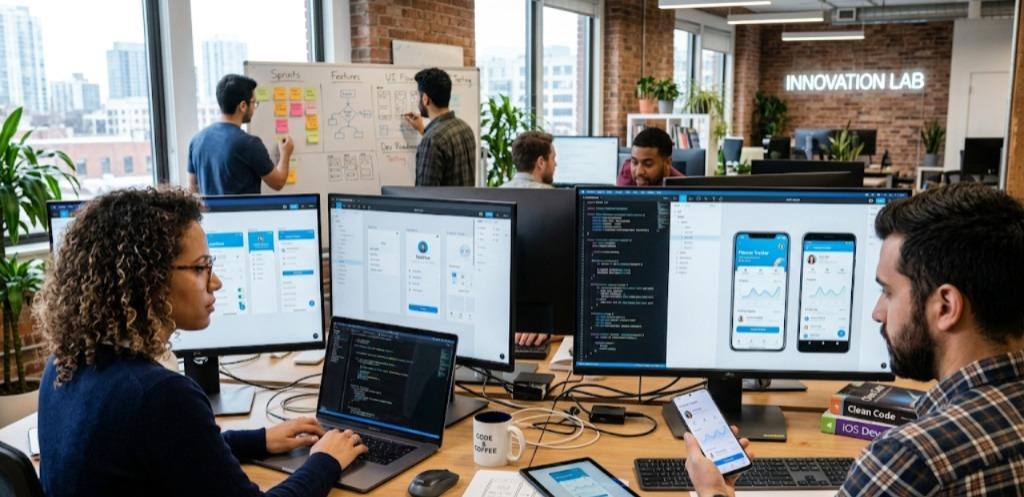
Choosing the right technology is one of the most important decisions when developing a mobile application. The framework affects development speed, application performance, maintenance, scalability, and the skills required to support the product after launch.
For businesses planning to outsource mobile app development India, understanding the available development approaches can make it easier to select the right technical partner and strategy.
Why Technology Selection Matters
A mobile application needs to do more than function correctly. It should provide a smooth user experience, communicate securely with backend services, and remain maintainable as the business grows.
Technology selection can influence:
- Development time
- Maintenance requirements
- Application performance
- Platform compatibility
- Development costs
- Access to technical talent
- Long-term scalability
The best technology is therefore the one that fits the application's actual requirements.
Native vs Cross-Platform Development
Businesses generally consider two broad approaches.
Native Development
Native applications are developed specifically for an operating system.
This approach can provide deep access to platform-specific features and may be appropriate for applications requiring extensive device capabilities.
Cross-Platform Development
Cross-platform frameworks allow developers to build applications for multiple platforms using shared development resources.
Flutter and React Native are two commonly considered options.
Cross-platform development can be useful when businesses want to reach multiple platforms while reducing duplicated development effort.
When Flutter May Be the Right Choice
Flutter provides a widget-based development approach and can be used to build applications across multiple platforms.
A Flutter app development company can create applications with highly customized interfaces and reusable components.
Flutter may be suitable for:
- E-commerce apps
- Booking platforms
- Financial applications
- Business tools
- Customer portals
- On-demand applications
It can be particularly attractive when consistent UI design across platforms is an important requirement.
When React Native May Be a Better Option
React Native uses React-based development practices and can be attractive for businesses already working with JavaScript or React.
A React Native development company can build applications that connect with existing APIs, databases, and backend systems.
React Native can be a practical option for:
- Social applications
- E-commerce platforms
- Business applications
- Customer apps
- Service platforms
- SaaS products
Businesses should consider their existing technical ecosystem before selecting a framework.
Consider Your Application's Features
The technology decision should be based on the features the application needs.
For example, an application may require:
- GPS functionality
- Camera access
- Push notifications
- Bluetooth connectivity
- Payment processing
- Offline functionality
- Real-time communication
- File uploads
- Biometric authentication
The development team should evaluate how each framework handles the required capabilities and whether additional native development is necessary.
Think About Your Target Audience
The target users can also influence technology decisions.
Consider:
- Which platforms customers use
- Whether mobile or tablet access is important
- Geographic markets
- Device diversity
- Internet connectivity
- Expected application usage
Understanding users before development begins can help businesses avoid investing in features that customers rarely use.
Backend Technology Is Equally Important
A mobile framework is only one part of the overall application.
A complete mobile solution may require:
- Backend services
- APIs
- Databases
- Authentication
- Cloud infrastructure
- Payment systems
- Analytics
- Notification services
The mobile application should be designed to communicate securely and efficiently with these systems.
The Importance of API Integration
Most modern mobile applications depend on APIs to exchange information with backend systems.
APIs may be used for:
- User registration
- Login
- Product information
- Orders
- Payments
- Bookings
- Notifications
- Customer data
A well-designed API architecture can improve reliability and make future integrations easier.
Security Should Influence Technology Decisions
Security should be considered before development begins.
Mobile applications may handle personal information, customer accounts, and payment-related data.
Development teams should consider:
- Secure authentication
- Authorization
- API security
- Data encryption
- Secure storage
- Input validation
- Session management
- Regular security updates
The technology stack should support the application's security requirements rather than creating unnecessary limitations.
Planning for Future Growth
Businesses should avoid selecting technology solely for their current requirements.
The application may eventually need:
- More users
- Additional features
- New integrations
- More data
- Additional platforms
- Advanced analytics
A development partner should explain how the proposed architecture can evolve as the business grows.
Why Outsource Mobile App Development in India?
Businesses that outsource mobile app development in India can access specialized developers without necessarily creating a large internal mobile engineering team.
An outsourcing partner may provide:
- Product planning
- UI/UX design
- Mobile development
- Backend development
- API integration
- Quality assurance
- Deployment
- Maintenance
India's large technology ecosystem provides businesses with access to teams experienced in a range of mobile and software development technologies.
How to Evaluate a Development Company
Choosing the right technology is only half of the decision. The development partner also matters.
Check Technical Experience
Look for experience with the framework and integrations your application requires.
Review Previous Work
A portfolio can provide insight into design quality and technical capabilities.
Evaluate Communication
Clear communication helps prevent misunderstandings during development.
Ask About Testing
Understand how the company handles functional, performance, compatibility, and security testing.
Discuss Maintenance
Ask how the team will handle updates, bug fixes, operating system changes, and future improvements.
Why Choose Indibus Software?
Indibus Software provides mobile application development services for businesses looking to build modern digital products.
Companies can outsource mobile app development India for projects involving Flutter, React Native, backend services, API integrations, testing, deployment, and maintenance.
The development strategy can be customized around the application's functionality, target audience, technical requirements, security needs, and long-term growth objectives.
Conclusion
Choosing the right mobile development technology requires more than comparing frameworks. Businesses should consider application features, target users, platform requirements, existing technical expertise, integrations, security, scalability, and long-term maintenance.
A Flutter app development company can be a strong choice for businesses seeking highly customizable cross-platform applications, while a React Native development company may be well suited to organizations already using React and JavaScript.
For companies looking to outsource mobile app development India, selecting an experienced development partner can make the entire process more efficient—from technology planning and UI/UX design to development, testing, deployment, and ongoing support.
The right technology is ultimately the one that supports the product's business goals today while leaving enough flexibility for tomorrow's growth.